Tampilkan postingan dengan label what. Tampilkan semua postingan

Senin, 23 Mei 2016

What Is Ebates and Why You Should Begin Using It

In the passed few weeks I have discovered an amazing, FREE website called Ebates. This website allows its users to receive cash back for shopping at a variety of stores. These merchants pay Ebates to refer customers to their stores and in turn you receive a chunk of cash back that you spent at that store. Its an incredibly easy way to make money online!

Its completely free to sign-up and when you sign up you are eligible for a $10 gift card at one of their sponsored stores. Some of the stores that you can receive cash back with are:

Nordstrom: 6% Cash Back
Under Armour: 8% Cash Back
Groupon: 6% Cash Back
American Eagle: 4% Cash Back
Kohls: 6% Cash Back
Gap: 7% Cash Back

And literally hundreds of other stores! 

With Christmas fast approaching, Ebates is the perfect website to use for those of you looking to save some extra money. Show your parents... I guarantee that they will thank you for doing so. 

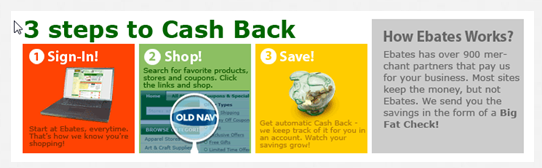
Heres How the Process Works....

How Ebates Works


Ebates as seen on CBS


So there you have it. Ebates is 100% legit and millions of people use it to save money while they shop online. Learn more about it here.

Read More..

Rabu, 18 Mei 2016

5 Reasons To Be Worried About The Next 5 Years

Hes done it. David William Donald Cameron and the Tory party have successfully gained a majority in a shock result to an election that was hyped up to be the closest in recent memory. Much of the country will of course be celebrating, but perhaps Britain should be cautious about how these next 5 years of Conservative government (potentially more) will pan out to be. Here are 5 major causes concern for Camerons next term in government.


EU 
A significant point of discussion over the next couple of years will certainly be that of Britains European Union membership. Cameron and the Conservatives, influenced no doubt by the wind of Euroskepticism on the right (à la Nigel Farage), have pledged to hold a referendum on EU membership by 2017. Of course, the public could vote yes and perhaps little will change, but should a no vote be the result, we could see some devastating results.

3,445,000 British jobs are dependent upon exports to the European Union, and many of these will come under threat as a result of the decrease in trade with the EU that an independent Britain would experience.. Of course trade with EU countries would not totally cease should Britain leave the EU, but we would become a far less attractive trade partner if we could not be a part of the EU trade concessions programme. As a non-EU country, it would cost more for France, Germany and the rest of Europe to trade with us; making us a less attractive trade partner. Furthermore, the price of our imports from Europe would be very likely to increase.

Camerons consideration of an EU exit poses a real threat to the Britain, not just economically but socially. Britain enjoys numerous privileges as a result of its EU membership- such as the freedom of movement it grants and the advantages it brings for students wishing to study abroad. And lets not forget the clout of the EU on the global stage. We are no longer the Empire that the Sun never sets on- Britain would lose a great deal of global prominence should it leave the European Union.

Green Troubles
The Tories dont have the greatest record on Green energy, and it seems that environmentally the next five years may not be all rosy for Britain. David Camerons reported remarks from 2 years ago that he wanted to get rid of the "green crap" that are the green levies on energy bills pretty much sums up the partys attitude to the environment.

Goodbye Wind Power- hello Fracking?
The Conservative Party Manifesto, however, tells us more about the energy policy Cameron seeks to pursue in office. Despite the partys pledge to invest in green energies that "represent value for money", plans to scrap subsidies for onshore wind farms (the cheapest form of carbon-neutral energy) are soon to go forward. The controversial fracking program is also to continue, despite the possibility it brings of contaminating water supplies and also releasing harmful methane and ozone gases.

Britain has seen terrible flooding problems in the past years, and many have claimed this to be partly attributable to a lack of spending on the part of the government building sustainable flood defences. Despite, this, the Conservative government have already cut spending on flood defences, and are seeking to further minimise spending on the flood issue in their next term- meaning parts of Britain are likely to suffer hugely yet again next time the flooding comes.

Cuts, Cuts and More Cuts
A signature of post-Thathcher Conservatism, we will undoubtedly see in the coming years a series of ruthless cuts made to government spending made in the name of streamlining the economy, reducing dependency on the government and cutting this deficit that Chancellor George Osbourne has often milked for political points in the past 5 years.

In the past 5 years, many of the governments austerity plans (such as scrapping housing benefits for young people) have been opposed and thus halted (or at least watered down) by the presence of the Liberal Democrats in the coalition.

With the Conservatives now in command of a majority in the House of Commons rather than being in coalition, they hold almost total autonomy over government policy. Now, they are set to go on an aggressive slimming down of public spending, according to the Office of Budget Responsibility, with a rollercoaster ride of £30bn of cuts lined up for the next five years.

These cuts include a reduction of the annual benefits cap by £3k to £23,000 and a removal of the youth housing benefits (the ones eanumber of food bank users doubling to 2 million a year.
rlier mentioned, that the Lib Dems prevented being passed through). In total, the Conservatives have £12bn of welfare spendings cuts planned out that will hit the working class, poorest of society almost exclusively. The impact will be devastating: an Oxford University study claims this £12bn of social welfare cuts will result in the

Austerity arguably doesnt even work- the Economic Policy Institute (see graph) are just one of numerous organisations that have highlighted that Austerity impedes economic growth. Thats primarily because austerity increases poverty, meaning demand is also shot down. Think of economic growth as a table, supported by consumer spending. Squeezing the public squeezes consumer spending, effectively chopping of the legs of the table and leading the whole thing to collapse.

Flexible Hours
The government have claimed to reduced unemployment during their last five years in office, which is in fact true: but as with most things, when it comes to jobs quality is just as important as quantity. According to the ONS, between October and December 2014, 697,000 people were working on zero-hour contracts- a highly controversial form of employment in which there is no guarantee whatsoever of the employee being able to work a certain number of hours. People have often described turning up to work to find out they arent needed, before having to head back home for a day without pay.

The uncertainty of a zero-hour contract creates problems for workers- not only does it waste time that could be spent being productive, but it creates huge instability for families that are most likely already riding the poverty line. It leaves hundreds of thousands of people unsure whether they will be able to afford their housing, their heating for the winter, or even their food.

Labour promised to put a ban to zero-hour contracts, and so did the Tories. Well, kind of- Iain Duncan Smith, the Tory Work and Pensions Secretary promised simply a paltry rebranding, to call them flexible hours. So on this front we will see change- but unfortunately where it really matters to the poorest in Britain the status quo will continue under the Conservatives. 

A Government Run for the Wealthy, By The Wealthy
Amidst all the cuts that will devastate the poorest in British society, the following 5 years will probably be rather rosy for the upper-middle and upper class of British society.
£1.2bn could have been raised by a Mansion Tax that would increase the contribution of the wealthiest to society, but it was ignored by the Tories, who chose to instead tax people on welfare with spare rooms in their house. This is just one of the many examples of the Conservative Party working for the wealthy elite, against the interests of the impoverished in Britain, those who really need the governments help.

This is where we come to the National Health Service, where perhaps the Conservatives will have the most devastating effect. Areas of the cherished national institution are already losing funds and being privatised. In the past five years, payments from the government to the NHS for each patient that is treated has been cut in effect by 10%, leading to problems that have already arisen such as a lack of beds and the infamous A&E waiting times. The governments response to this is, rather than taking the blame, often to criticise these areas of the NHS and push for their sale to private more efficient hands. Just in the past month, the Tories signed off a £780m sale to a group of private companies that with dubious past records. 

Take one of these companies, Vanguard, that was previously given the responsibility for eye treatments in Musgrove Park Hospital, Taunton. The contract was terminated just 4 days after beginning, with HALF of the 60 patients it had treated facing post-treatment complications as severe as a complete loss of sight. 

This highlights the illusion that private companies provide the best results for the consumer. Of course, this is indeed often the case (no one would argue to nationalise Apple, for example), but health is a completely different ball game. As is clear in the United States, a profit-driven health sector is against the publics interests, but it is indeed in the interests of those big businesses that these services are handed to. 

And these are just a few of the results of the Tory squeeze on the NHS. Between 2010 and December 2014, 4000 nurses had lost their jobs. Those who havent lost their jobs to the cuts have seen their pay frozen for a number of years. For the patients and the staff of the NHS, the next few years are not looking rosy. 


Read More..

Kamis, 12 Mei 2016

Recap on how to make money online as a teen

Okay, hello everyone. Chances are that if you are reading this post you are a teen looking to make some money online. If you are than you are at the right place, if not I dont know what youre doing here.. Trust me though, dont expect to start making a couple thousands dollars here and there. Making good money online takes hard work and effort, but it is definitely manageable. However, if you are just looking to make a couple extra bucks each month then you dont have to worry about spending countless hours on the computer.

I suggest you check out IMreportCard if you have not already. They offer real reviews from real people on all of the top ways to make money online. I always check them out before I join any program on the Internet. They also pay you for grading programs, writing reviews and leaving comments. I have been paid about $80 from them in the past 2 months without even trying.

CashCrate. They are the absolute best program for teens looking to make money online each month. I have been making hundreds of dollars with them for the past year. However, dont think that you will start making big money like that today. It takes time and hard work to develop a down line like I have. In the long run it is definitely worth it though.

If you arent willing to spend a lot of time promoting your referral links than it is still very manageable to make a good $50 each month on gpt sites like CashCrate as a teen. Sites like cashcrate are called "survey sites" for a reason. By spending a couple hours each week completing surveys on CashCrate I have been able to make upwards of $70 a month without any referring.

Showing teens how to get referrals is the purpose of this blog as it is a very hard task. I have told you all many times not to get discouraged if you only make a couple referrals in your first month of promoting. Believe me, if you work at it you can be making a great amount of cash without having to fill out any surveys.

I know that this has been a very short post but I just wanted to recap on how to make some extra money online as a teen for all of you. And remember, it takes hard work! Have a good one!
Read More..

Minggu, 08 Mei 2016

My Advertising Pays What Do You Consider To Be A Scam

My Advertising Pays - What Do You Consider To Be A Scam?
Before you judge a product or service - make sure everything you see, touch, buy and own is perfect. 
Everyone has an opinion, to which theyre entitled to. But many people will jump straight in with the time honored phrase, "Oh, it must be a scam (because I dont understand it)", without really taking much if any time to see how a business or opportunity actually works.
 
Its easy to criticize a new website as it goes through teething problems as "a sign" that theres something deeply un-holy about to happen and an indication of just how incompetent these "cowboys" must be. 

If youve been following this blog, youll know we are moving house soon, although it has now been delayed for a week as the purchasers are waiting for their funds to be deposited to their bank. 

So, as with any house move theres always lots of "stuff" to do like changing insurance details, arranging the re-direction of mail, organizing a new telephone line etc. 

In the past week alone, I have encountered so many problems (some might say theyre just badly run operation - some might even say theyre scams) that we all take for granted - apart from the occasional moan to a work colleague. 

Take for example, changing the car insurance to the new address. This incurred a fee, when all they were doing was pressing a few buttons on a keyboard. Is this a scam? We moan about it, then accept it!

I tried to arrange a new phone line and broadband for our new house with a well known UK Postal Service (the biggest!).
Every time we tried use the website, we couldnt fill in many of the fields because we noticed there was a problem with the encryption of the "https"
causing errors. After several phone calls, emails and "rate our service today" surveys where I tried to tell them their site need fixed - it still isnt!
Is this incompetence and a sign theyre up to no good?  

And two un-related but equally frustrating stories:

Lorna need a new battery for her car, so it Halfords (a large Uk motoring superstore chain) had the best deal and we attempted to shop online so we could collect the battery later.
No need to guess that there were problems with the sever and various error messages would appear.
   A badly maintained website,
 or just a glitch that probably got fixed at some point?


My point is, just like all these supposedly reliable big name high street chains, My Advertising Pays has had its teething problems too.
The difference is they have ALWAYS fixed the problem.

Sadly, there are a few individuals who jump on the vaguest of issues to claim to the world that the site is about to crash and were about to burn in the fires of hell!  

At the end of the day I can only continue to write my blog and show you how I personally am doing. If you like what you see, thats brilliant.
If you choose to join thats cool too. If its not for you, then its no problem.
"Taking action",  is a phrase I, and a lot of people on-line use, and it can sound a bit cheesy. But, the reality is, its something you have to in whatever you choose to do in life. 

If you feel youve got that motivation in you to make that choice,
why not get in touch.
Hey, you could be better at it than me!              


Read More..

Kamis, 05 Mei 2016

What Is Corbynomics

With the results of the UK Labour Party Leadership Elections set to be announced this Saturday, its time to take a look at the economic policies of one of the candidates considered the frontrunner, and also the furthest to the left, by many- Jeremy Corbyn.


The Islington MPs economic proposals have made such an impact that they have come under the new title of Corbynomics. Though, admittedly, adding nomics to the names of his rivals would lack the front page appeal of this title (especially Burnhamnomics, or would it be Burnhamomics?), it is undoubtedly the unique nature of Corbyns policies in the leadership race that has brought them a name to come under.

So, what are Corbyns policies, and are they credible? Here are 4 of his policies that are making the headlines.

An End to Austerity

"You just cannot cut your way to prosperity so Britain needs a publicly-led expansion and reconstruction of the economy, with a big rise in investment levels."
Corbyn is a strong opponent to David Cameron and
George Osbornes policy of austerity.

One of the most appealing policies to his supporters on the left, Jeremy Corbyn has pledged to bring an end to the money-saving spending cuts that have been enforced in recent years by the Conservatives.

This means that a government under Corbyn would end spending cuts on public services such as the NHS, the education system and transport- in fact, he would be likely to increase spending on these as demand increases due to a growing and ageing population.

Corbyn would also reverse one of the most controversial austerity tactics, that is the privatisation of public services. He has pledged to renationalise the railway system, and also prevent the further privatisation of the National Health Service.


Reducing Foreign Military Presence


Jeremy Corbyn believes Britain should learn lessons from
an intervention in Iraq seen by many to have failed.

"Thousands more deaths in Iraq ... will set off a spiral of conflict, of hate, of misery, of desperation that will fuel the wars, the conflict, the terrorism, the depression and the misery of future generations." (2003)

However, the only cut that Corbyn proposes is with regards to the military. He is a fervent anti-war activist, something highlighted by his strong criticism of past actions such as Tony Blairs move to invade Iraq, and current proposals like those to militarily become involved in Syria. So, a Britain under Jeremy Corbyn would reduce its military presence in areas like the Middle East, thus saving a considerable amount of money.

Furthermore, as a believer in non-proliferation of nuclear weapons, Corbyn would close down Britains nuclear weaponry facility Trident, located in Scotland. This would not only save money, but also be a welcome move, considering a significant proportion of Scots are against the facilities themselves. However, some worry that such military contraction would endanger Britain, in what many see as an increasingly threatening world.


Quantitative Easing for the People

"QE for people instead of banks"
Banks would no longer benefit from government QE
programmes under Corbyn.

Quantitative Easing is nothing new in government policy, but the manner in which Jeremy Corbyn seeks to implement the divisive policy highlights the new direction in which he seeks to take Britain.

Put simply, in the current system of QE, the Bank of England creates new money that is inserted into the accounts of national banks, with the aim of encouraging these banks to lend more openly and thus stimulate spending in the economy.

Corbyn wishes for the Bank of England to continue creating new money, but proposes that the finances created should not go to the private banks, but a state-owned National Investment Bank, that will "head a multi-billion pound programme of infrastructure upgrades and support for high-tech and innovative industries".


National Education Service

Tuition fees have been a source of discontent for many
of Britains young people. Under Corbyn they would not exist.
"To become a high skill, high pay, high productivity nation we need to invest in education throughout peoples working lives - that is the path to prosperity for all." 

A significant part of Corbyns anti-austerity programme would be the increasing of government spending on education. There has been much uproar in the past decade over university tuition fees, first introduced by Labours own Tony Blair, and increased to as much as £9,000 a year under David Cameron.

Not only would Jeremy Corbyn abolish these tuition fees, but he has also proposed the reintroduction of university grants, which have just been replaced by loans.

Free university forms a major part of Corbyns National Education Service proposal. This system would see the government increase spending on education (funded by tax increases, government military spending cuts and the economic productivity boost the Corbyn camp believe their policies will bring), in order to make education accessible to all, providing universally free childcare right up to free university.

Read More..

Rabu, 20 April 2016

MyAdvertisingPays What The Internet Didnt Tell You!

MyAdvertisingPays - What The Internet Didnt Tell You! 
So you think you found out all there is to know about MyAdvertisingPays,
 from the handful of people that dont!

Check out this short and concise video which, simply and clearly explains just what MAP is and isnt. Remember there are people out in the net that claim to know everything,
 whilst having little or no experience of the subject in question. 

Its really great to see a simple logical explanation of how ponzi schemes and pyramid schemes work and the glaringly obvious differences between them and MyAdvertisingPays.
Also the arguments that an individual involved with this, or by the same logic, any business, that has failed before, is somehow akin the devil and is obviously not to be trusted. 
If such arguments were used throughout history, many of the worlds greatest inventors, businessmen and entrepreneurs would never have given us the wealth of opportunities and inventions that we enjoy today!  

Personally, I AM speaking from experience,and you can follow it all in this blog.


To the future,

Tim Brigg :) 
Read More..

Selasa, 19 April 2016

CashCrate Question and Answer for Teens

First off, if you arrived at this blog via a search engine check out my cashcrate proof of payment for $476.55. If you are a teen and are looking for a ways to make legit money online than this is the site for you.

Okay, so today I thought I would answer a couple questions I have been receiving from teens lately about CashCrate and ways to make money online.

1.) I have been scammed before, what makes cashcrate so different?

Before I joined CashCrate I was just like you. The thing about CashCrate though, is that they actually do pay. I am only 17 years old, yet I have made over $2500 with them in the past year. CashCrate is a great way to earn some extra money when you dont have a lot of time or money to work.

2.) How long should I expect to work if I want to make a lot of money?

That answer depends. If you have some miracle system that will generate you a lot of referrals then all power to you. But for the rest of us, you can expect to work a couple hours each week if you are just completing offers. However, if you want to make the big bucks then you have to spend a lot of time writing articles, submitting them to article directories and just spending time on search engine optimization for your blog/website.

3. I made a blog but I have not gotten any referrals out of it, how come?

This answer is simple. You either picked a bad keyword or you have not spent enough time getting quality backlinks. Believe me, it usually takes about 3 months before you start receiving any good traffic to your website from search engines. Just dont be a lazy teenager and youll be fine.

4. Am I going to receive any junk mail from paid online survey sites?

Yes you will. Thats why I made a junk email when I was completing offers. If you use your real email address than your inbox will be flooded with promotional offers. You will also receive the occasional letter to your house, but those are generally few and far between.

5. How old do I have to be to join paid online survey sites?

Most online survey sites require that you must be 18 years old to join them. However at CashCrate you only have to be 13 and that is why it is perfect for teens looking to make money online.

6. Is there a better way to make money online as a teen?

Im sure there is, but they are probably scams. One site that I know isnt a scam is CashCrate. They have over 1.5 million members and have paid out millions of dollars to their members.
If you have any other questions about paid online survey sites and make money online as a teen just leave a comment and Ill answer it.
Read More..

Minggu, 10 April 2016

Is My Advertising Pays a Scam What makes you think it is

Is Myadvertisingpays a scam?

Once again, the (extremely) small minority of mud slingers have been at it with a mind numbingly dull and frankly uninformative article in
the Sunday papers recently.
Now, hey what do I know about anything. Im fairly new to all this, but what I can tell you is MAP works, I have made and withdrawn money and intend to continue to do so. 


I dont know why (well I have my theories) Advertising Executives with many years of experience running apparently busy successful Advertising Agencies, find the time or inclination to try and discredit
  My Advertising Pays. 

Most people have failed chapters in their lives and most move on. 
But, for some reason some folks reckon other peoples mistakes are far worse than their own. 

Is it jealousy, have they missed the boat or is it badness - who knows, but spending time and energy in a bid to "Save us all", seems a little contrived.
Or are there other forces at work here, including a hint that they have the ultimate, most fantastic, totally legal, honest and trustworthy business that ever existed, and of course everything else is crap!

Of course everything in the internet is scam right?

Wrong, but who do you believe?
A couple of angry people with too much time on their hands (remember they have a hot line to the FBI - yeah right!)
or nearly 200,00 people all actively using the business, making money and showing as such with social proof.

Theres plenty to be found without me doing that here. 

Theres nothing wrong with criticism and discussion, but mud slinging, name calling and trying to discredit ordinary folks trying to better themselves is sad and quite frankly, playground stuff!   
   
Read More..

Jumat, 08 April 2016

Supply Side Trickle down economics does it work

Supply-side (or trickle down) economics has for the past few decades been one of the discreet tenets of Western economy. Its the belief that giving financial benefits to the wealthiest of society (in the way of tax cuts/breaks, regulatory advantages given to big businesses) will inevitably benefit society as a whole, as the wealth will trickle down the economic ladder in the form of employment, pay rises or whatever else of the extra wealth the richest will generously share with the rest of the population.

Its been a policy the conservatives of America has held ever so close to their hearts, and one that has faced much opposition by the lower and middle classes of America.

So how did trickle-down begin?

A turning point was certainly in the 1980s, during the divisive periods when Ronald Reagan and Margaret Thatcher were in power in the USA and UK respectively.
Perhaps never have two leaders either side of the Atlantic been so harmonious- Reagan curiously dubbed Thatcher "the most important man in England", and Thatcher once described Reagan as "the second most important man in my life".
The harmony of the two certainly extended to economic policy; both leaders were strongly influenced by the Chicagoan and Austrian schools of economics, the proponents of which included notable anti-regulation, free-marketers Milton Friedman and Friedrich Hayek.

Trickle-down was one of their most prominent legacies. Thatcher and Reagan carried out drastic economic changes that were designed towards supply-side economics (another name for trickle-down). The most important relevant policy change was that of tax rate changes.
In the USA, the Tax Reform of 1986 saw the top tax rate for individuals drop from 50% to 28%, partly compensated for by an increase of the bottom rate of tax from 11% to 15%. This was the very first time in the history of the USA that the top rate of tax fell at the same time as the bottom rate rising.
In the UK, Thatcher followed suit by dropping the top rate of tax from 80% to 63%, meanwhile almost doubling VAT (Value-added tax) and the amount everyone had to pay to fund the National Health Service. However, she did indeed drop the common tax rate from 33% to 30%.

So what were effects of these trickle-down policies?
Lets remember, the motivation supposedly behind trickle-down economics was that the population as a whole would benefit from the wealthy being wealthier. The idea is that as the national wealth pie grows as a result of the richer getting richer, everyone elses pie would simultaneously grow as a result.
So has it worked?
Well, a certainly interesting effect is encapsulated well in the following graphic:


Comparison of wages of the top 1%, overall wages and productivity.
(Mother Jones) 
Note the real separation point on the graph, where the average income of the top 1% really lifts off- its after the turn of the decade, through the 1980s- conveniently the decade of Reagans presidency.

Note not just how the income of the top 1% rises incredibly, that as productivity increases the average overall wages of the population lags behind, barely increasing in relation to the other two factors in the chart.
The meaning of this is pretty unpleasant- the pie of wealth may have increased, but this chart suggests that more prominent has been a relocation of sorts of national wealth.
The wages of the overall population has suffered since the 1980s when it is considered that productivity has boosted- the overall population have not benefited in terms of wages from this increase. Instead the wages of the wealthiest have been boosted far more than before the 80s.
CEOs in 1965 made 24 times more than the average production worker- in 2009, this figure was 185.

It seems clear that wages of the middle and lower classes, contrary to the motives of supply-side economics, have suffered as a result of the policy- meanwhile clearly the wealthiest have benefited HUGELY.

So why havent most of the population benefited- a key belief of the theory is that its better for everyone if the wealthy are wealthier, right?


Buffett has been a prominent opponent
of trickle-down economics.
Here there is a great fault in the trickle-down ideology- reduction in the taxes enforced upon the wealth is itself no guarantee of further reinvestment into the economy.
This is because the benefits are being given to people who are not in need of it. Little is in the way of CEOs creating new jobs to further production- most already have the capital available to invest where they see fit.
Warren Buffett (pictured right), one of the wealthiest men in the world, and perhaps the most prolific investor claimed "People invest to make money, and potential taxes have never scared them off". Taxes are rarely a stumbling block for the wealthiest, who are willing to take risks to invest (most entrepreneurs are where they are now as a result of their calculated risks).
Therefore tax cuts to the wealthy rarely open the doors to new investments. Instead it leads to simply a further amassing of wealth by the wealthy. By no means will the wealthy invest everything they benefit from tax cuts, to the gain of the middle and lower classes as the theory suggests. A staggering example of this is how currently the top 1% of wealthiest people in the world control 39% of the worlds wealth. This is a clear sign of a broken global system, a large part of which is thanks to trickle-down.

Trickle-down, supply-side, Reaganomics, whatever name it is called, is a lie.

The solution lies not in blessing the wealthy with benefits and hoping that it will filter down to the rest of society, but the solution lies in the middle class. We need to make the middle the centre of our economic system, and see middle-out growth that will benefit everyone (yes, including the wealthy).

Middle-out. That is the solution we need.

Sources for this article can be found linked within.
Read More..

Minggu, 03 April 2016

Sorry Taylor Swift Youre Not Entirely Correct

Pop icon Taylor Swift has had a rocky time, to say the least, with the modern phenomenon of music streaming. Last July, she took a stand against streaming service Spotify, when she removed all of her music from the service and branded it as "undervaluing the art" that is music by offering free, ad-supported subscriptions. Swift cited in particular how underpaid artists putting their music onto the streaming service were, effectively making less than a cent per stream.

Many believed Swifts dramatic exodus from Spotify was simply a part of an exclusivity deal with Apple, and their recently announced service Apple Music. But it turns out this is far from the case, as a tumblr post just today from the 25 year old revealed. The post, titled "To Apple, Love Taylor", dealt to Apple what she had dealt to Spotify last year. In an unexpected move, Swift revealed she was not going to allow her music to be streamed on Apples service either.

Why? Unlike with Spotify, she does not discuss the lack of revenue an artist receives for each stream, rather the effect of the initial three month trial that Apple plans to grant users of the service. Swift called it "shocking, disappointing" that during these three months, Apple Music provides no revenue at all for the artists, as it receives no income from the user. And, according to herself, Taylor Swift is arguing not from her own position as a world-renowned star worth over $200m,  but from the position of "the new artist or band that has just released their first single and will not be paid for its success", "the young songwriter", "the producer who works tirelessly". Essentially, Swift is putting forward the argument that the free 3 month trial being proposed by Apple to customers is putting smaller artists at a loss, failing to reward their efforts.

However, there are areas where I quite disagree with Taylor Swift. Firstly, she is correct about the lack of lucrative music streaming opportunities. Its no secret that despite its massive growth, Spotify has been finding difficulty in creating sustainable and spreadable profits. But is revenue really the priority of an artist, big or small, when they put their content onto streaming services such as Apple Music or Spotify? Swifts own friend Ed Sheeran disagrees with the notion of doing so with income being the primary motive. "Im in the music industry to play live," he claimed last year. "Thats why I put things on Spotify". He highlights his enjoyment of playing live, and indeed playing live is the far superior source of income for the significant majority of musicians both small and large. Sheeran sees the real value of streaming services, in how they provide a platform for artists to promote not just their music, but themselves- their merchandise, their YouTube channels and most importantly their live shows.

Like most artists, Taylor Swift derives most of her income from live shows- six months on the Red Tour in 2013 bringing her an estimated $30m. Justin Timberlake provides another example of how tours bring in far more revenue. In 2013, 39 shows made him over $40m, compared with a paltry $5m from combined streaming and album sales.

For smaller artists, there is a little difference. Streaming services are arguably a little young in this respect, but free media has more than shown its worth for smaller musicians, notably YouTube, from which the likes of Justin Bieber and recently Charlie Puth have found their fame. Apple Music and Spotify, with their ability to feature smaller talent, certainly has the potential to do the same for many other artists, and in that sense provide far greater value than just revenue from streaming.

And lets have a look at the impact of the three month trial in particular. Everyone knows the allure of a free trial. There is no doubt that more people will sign up to Apple Music because of it, and whether or not they leave after the trial is up is not of as much significance as we may think. Three months is quite a lot of time to explore and discover new music, to find new favourites and to support them, whether its through merch, buying their content or a ticket to their show. Of course, users wont be able to discover everyone in this three month period, but one has to realise that artists will certainly receive more traffic and attention when there is a larger group of streamers available to them- three months of this is better than none.

And lets not forget the power of a free trial to retain customers. Apple has very deliberately set a rather long free trial of 3 months (Spotifys is just a third of this). It gives users time to get themselves hooked. Streaming music, whether from your phone, tablet or computer, becomes part of your routine and three months is ample time for the streaming habit to settle in. Therefore it is very likely that a sizeable portion of Apple Music free-triallers will continue their subscriptions and pay for the service after the trial is up, providing the paid support that Swift wishes for.

Its important to note that Taylor Swift is not totally anti-streaming. She notes in her open letter that everyone knows that Apple "has the money to pay artists... for this three month trial period", and indeed this is true. Apple should cough up for the artists in this three month period.

But even if it doesnt pay out, its not entirely correct to argue that musicians, big or small, will not benefit at all from streaming, whether its Apple Music or Spotify. For the value of all types of music streaming clearly lies not in its money making capacity, but rather its ability to promote, to introduce artists and their work to vast amounts of new audiences. These new audiences, and the money that they spend buying merchandise, albums and live tickets are the most substantial, long-term rewards that streaming, free or paid, brings to artists.

So Taylor, making massive amounts of money from Apple Music or Spotify, as you know well, is probably a futile effort for most artists. But that doesnt mean theres no value, nothing to offer to artists, in these services.
Read More..

Minggu, 27 Maret 2016

What Has Happened To The Greek Economy


 The recent decade has seen turbulent times for economies all around the world, and perhaps the most notable of such sufferings have been witnessed within Southern Europe. Spain, Portugal and Italy have fallen into economic turmoil, but one could argue that these problems pale in comparison to those being currently faced by Greece, a country where the last 6 years have seen unemployment triple, public debt ruthlessly pile up, and the economy shrink by a quarter. The lack of money in Greeces financial institutions is such that citizens are being warned of banks shutting down their ATM services, simply because there is not enough cash to give to people who want to withdraw from their own accounts. In 2012, the situation got so desperate that the government had to secretly ship in cash from abroad to prevent a shortage.

But where did it all go wrong? Why is it Greece in particular that has gone through even tougher times than the rest of Europe?

Well, from the onset you can see that the deadly nail in Greeces economic coffin has been its borrowing from other countries and organisations such as the IMF, in order to finance public spending.


Greek public spending during the 2000s was incredibly high, especially in relation to the size of the economy and its productivity. Spending on the public sector (as a percentage of total public expenditure) was higher in Greece than anywhere else in the OECD, yet according to Paul Belkin, Derek Mix and Rebecca Nelson, there was "no evidence that the quantity or quality of the services were superior". Indeed, the nominal output of the Greek economy had grown by 40%, and tax revenues 31% between 2004-2009, yet total government expenditure grew 84% during this period. Some
argue that the Greek governments of recent decades have been bribing the electorate, providing public sector jobs that are overpaid in order to maintain popularity among the public- at the cost of long term economic stability.

Spending also came in forms other than public sector employment. The 2004 Olympic Games, for example, put a crippling burden upon the government of $8.6bn, contributing to debt by 2005 amounting to €50,000 per household.

What further compounded the economic struggles was the outbreak of tax evasion Greece has seen in the past decade, particularly since the financial crisis of 2008. According to a Greek Finance Ministry Report, during the initial period of crisis, the state had only taxed a third of its citizens officially declared income. More recently in 2013, it was revealed that the state collected only half of what was due in 2012. Such tax evasion activity has been estimated to cost the treasury over $20bn a year, and it has landed Greece the rather unenviable positions of having the lowest tax revenues per capita in Europe, and according to the 2012 Corruption Perception Index, being the most corrupt country in the EU.
Greek Debt, visualised in trucks of cash.

The consequence of such public spending in spite of a lack of revenue for the government has resulted in a colossal amount of debt being collected in Greece. As of now, Greece owes €360bn to the IMF, the ECB, and numerous lenders throughout Europe, notably from Germany, France and Italy.

Theoretically, lending and borrowing usually works out for both parties. The general idea is that a country can borrow from another, and use that money to be productive and make more money, allowing them to pay back the lender and also make a profit.

But Greeces situation is far from theoretical; despite efforts by the European community to reduce its debts (in 2011, the banks had to agree to half Greeces debts to them), the outlook is not rosy for the Mediterranean nation. Its newly elected leaders, the Syriza government are being brutally honest about how they see the future and fears are escalating that they will have to default on their debts, a move that will accompany an exit from the Eurozone and no doubt a long ensuing period of turmoil and instability, not just for Greece and its citizens, but for much of the rest of Europe too.

Read More..

Kamis, 24 Maret 2016

Does Government Debt Actually Harm Future Generations

Tom Goldsworthy
The USAs national debt, visualised if it were in stacks of cash.


Does government debt harm future generations, as it is often argued? Government borrowing is argued to be immoral because of the supposed burden it places on our children, and our childrens children, and so on.  Higher debt-financed consumption today makes future generations poorer tomorrow, so the argument goes.  An article in the Telegraph last year entitled, Its time to come clean about our national debt used this very same argument.  Liam Halligan, the articles author, said:

"Why should we borrow so much, foisting our profligacy on our children and grandchildren...A spiralling national debt isnt only bad economics, but is also morally repugnant."

Unfortunately, many would point out that the economic logic behind the above argument does not completely hold.  In theory, government debt need not necessarily leave future generations any worse of at all overall - net.  This is because, for every pound the government borrows, there must be someone on the other side lending that money.  So, assuming all government debt is held only domestically, the burden on future generations will be zero.  While some parts of the population will pay higher taxes to service the debt, another section will receive interest payments for lending the government that money in the first place (and these two groups are likely to overlap).  Of course, there are many other reasons that excessive government debt may be undesirable in terms of its effects on future generations, not least the distributional consequences, but in terms of the question of a net burden on society, the case does not hold.

Having said that, around 1/3 of government debt is in foreign hands, and so there will be a net burden on society in the future to an extent.  The assumption that all government debt is held domestically is not completely accurate in Britain.  

Although, even then the argument over whether government debt burdens future generations is not settled.  It depends on how the government spends the money it borrows.  If it is being used to finance short-term consumption, then, yes, the fact that around 1/3 of our debt is foreign owned will mean that we are enriching ourselves at the expense of future generations. But, if the money is used to finance vital, beneficial long-term investments in, say, infrastructure, then future tax payers will feel the benefits of that spending, as well as the costs, and so not necessarily be worse off overall.

So, while in theory government debt neednt leave a net burden on future generations, in reality it probably will to an extent.  However, as shown, when government debt is domestically held (as 2/3 of British government debt is), hyperbolically stating that government borrowing is morally repugnant, irresponsible and so on, is clearly a huge exaggeration.  As the economic logic shows, the majority of British government debt will, in fact, not leave future generations worse off.


Tom Goldsworthy is the founder and editor of The Economic View, a blog that aims to provide the economic view on current events, analysing topical issues with the economists toolkit. 
Read More..

Rabu, 23 Maret 2016

Government Regulation Gone Wrong


A 2013 report showed France to be quite the bureaucracy- it claimed that over 400,000 directives were being enforced, ranging from how far a postbox is allowed to stick out of a wall to how much boiled egg a kindergartener can eat at lunch time. 

The examples seem petty, but more serious regulation is coming to the cost of small town and village budgets- for example a law enforced making all pavements at least wide enough to allow two wheelchairs to pass. 
Of course, this is not a bad idea in itself, however when Paris enforced this on every French town or village, it becomes a problem- in many cases this blanket ruling is uneconomical, perhaps if there are few disabled people in the area or few people altogether.

According to Michel Therond, mayor of 25 years of the small town Albaret-Sainte-Marie, he gets letters with new regulations or stipulation from every time he opens his mailbox.

In many cases regulation is not as disputed- regulations on the minimum drinking age, or that businesses must hire employees regardless of any disability are largely accepted by society. However this excessive bureaucracy can have damaging effects on a country’s economy- it can mean managerial-type people are employed with high wages to not do very much, it can put pressure not necessarily on the cities, but smaller town or village councils- and it does not always work.

In Mexico City, at the time of a great pollution problem (that still exists in part today) a regulation was enforced that aimed to reduce car use and thus emissions and so on. So the government created Hoy No Circula (literally meaning Today it (your car) does not circulate)- a legislation that stated that cars with only cars with certain numberplates could be on the road on certain days- to bring this example to england you could say that on Mondays, Wednesdays, Fridays, only cars whose number plates begin with letters A-M can drive, and on the other days, cars N-Z. 

In Mexico City however, this plan backfired- it’s a typical example of what is known as the Cobra Effect. Most people needed their cars everyday- to go to work, do shopping, go to places where cars were the only reasonable, comfortable way to get there. So people didn’t start walking or taking the bus on days when their car could not be on the road- instead people just bought a second car, with a plate that would allow them to go on the days they previously couldn’t- granting them car usage for the whole week. It was quite an ingenious way of avoiding the regulation.

However we must remember that most people of Mexico City were not wealthy- so the second cars these people did buy were more often than not old beat-ups- whose emissions were even worse than their first cars. The result? Not necessarily fewer cars on the road, but instead older, more polluting cars on the road. This regulation did not last long, unsurprisingly.

This was the Cobra Effect- the origins of which I’ll briefly explain in another article.

So bureaucracy can be damaging, that’s for sure. Regulation may be necessary in areas, but like all things, in careful measure.

SOURCES:
French bureaucracy effect on small towns 
http://www.theguardian.com/world/2013/apr/30/government-rules-hinder-france-growth

Hoy no Circula regulation http://geo-mexico.com/?p=2343

Driving Restrictions and Air Quality in Mexico City www.rff.org/Publications/WPC/Pages/08_15_08_Driving%20Restrictions%20and%20Air%20Quality%20in%20Mexico%20City.aspx Lucas W. Davis
Read More..

Senin, 21 Maret 2016

CashCrate Tutorial

If you have not done so yet, sign up at CashCrate

Once you click on the above link, you will be directed to CashCrate.

Sign Up:
make money online teens


Once you signed up you want to start earning, click on complete offers:


teens make money online


There are point offers, cash offers, and daily surveys. If you dont want to spend a dime on surveys, like me, then click on 100% free offers from the drop down menu.

There are many offers to pick from, so choose one that has a nice payout, and easy requirements.

how to make money online as a teen
Click on an offer and begin to fill it out:teens make money online with cashcrate


Once you are done, Click submit offer, and your offer will be submitted.


teens make money online
However much the offer was worth will now be pending. Pending credits usually take about an hour to be accepted and added to your account.
Read More..